
Shifting Academia’s new user experience from one-time revenue to long-term engagement
I led design across three stakeholder teams to rethink onboarding, driving 2.5x completion and 8.4% more returning users.
60-second summary
The problem
The existing Academia onboarding experience did not support new business goals. Our newly launched networking platform shifted the user behavior we wanted to foster during a user’s first visit.
A majority of our traffic comes from SEO; therefore, we often have just one opportunity to acquire users. Historically, we had optimized to get immediate upgrades. Now, we want to adapt the onboarding flow to prime first-time visitors for long-term engagement.

Key decisions
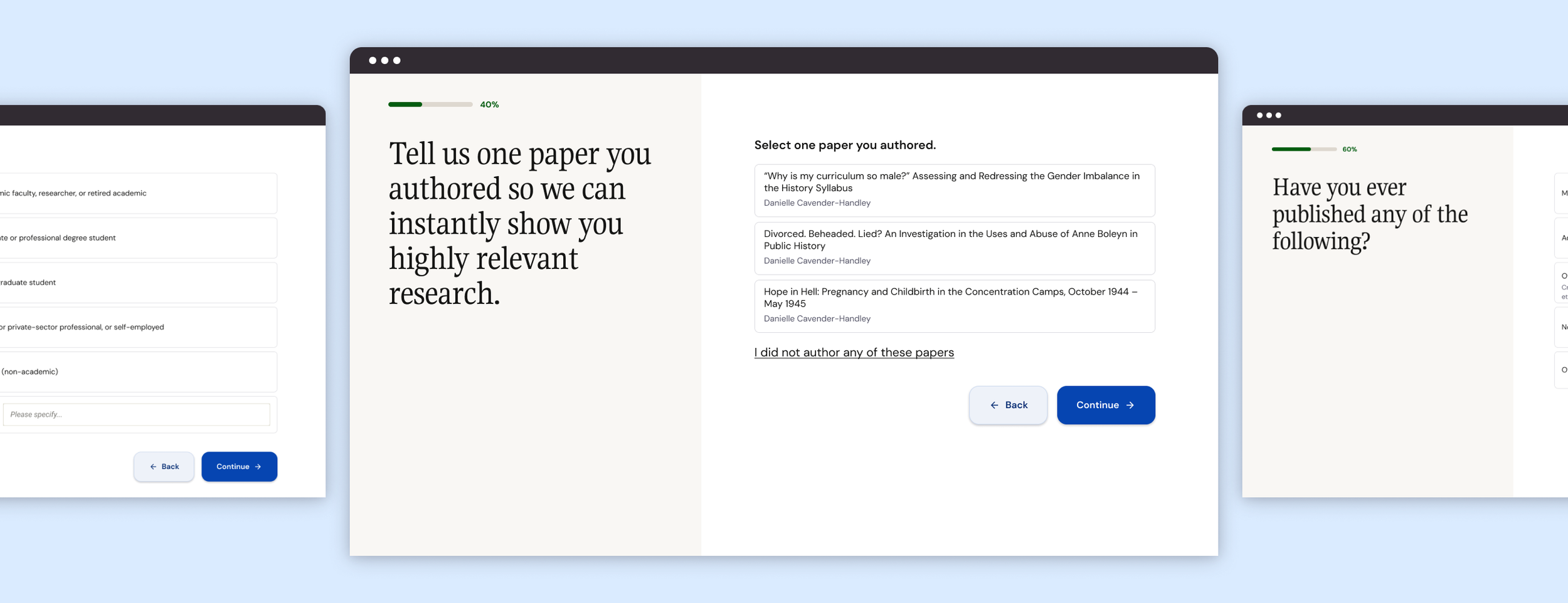
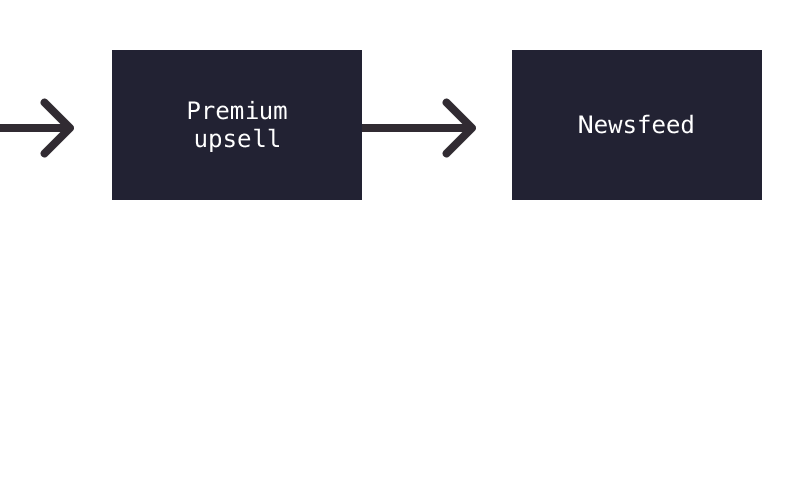
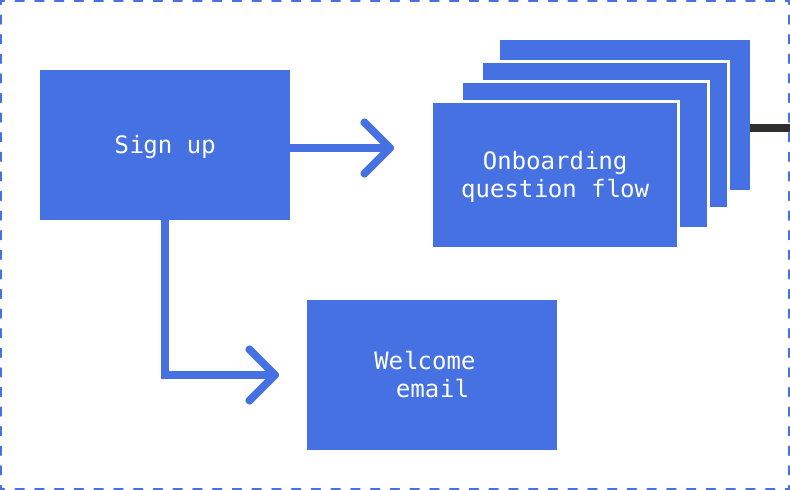
Academia’s onboarding is a multi-step flow: account creation, demographic questionnaire, and premium subscription upsell. The basic structure needed to remain because the high-level requirements did not change.
The levers available to me were improving the account creation experience, a flexible presentation of questions, and a final landing [new] destination on the user’s networking profile.
What we learn about users during onboarding is used to personalize their cold-start experience.

My role
As the sole designer working on the onboarding experience, I coordinated a cross-functional-friendly design process that included multiple stakeholders.
Our onboarding flow is an important channel to many product teams and the most popular A/B testing location. As I recommended changes to onboarding, I needed to consider the short- and long-term strategies of the product teams that depend on our onboarding questions for gathering relevant user data.

Impact
Each phase of work resulted in incremental improvements to the onboarding flow. The original goal was to affect long-term engagement with Academia. We evaluated ‘return visits within 30 days’ as our proxy. Our first round of changes resulted in an 8.4% increase in repeat visits.
Onboarding changes also decreased user drop-off and saw question flow completion increase by 2.5x.
Account creation revisions increased sign-ups by 2.7% and logins by 10.34%.

The onboarding experience no longer supported our business goals

Most Academia visitors only visit once.
This restricts our growth opportunities, as we have a single chance to engage and transact with new users.
Our original sign-up flow was optimized to maximize revenue during this one-time interaction. The driving reason for this project was to transition our onboarding experience to nurturing long-term engagement.
We focused our efforts on our highest traffic acquisition flow

The single work page (SWP) is where 86% of Academia’s new users originate.
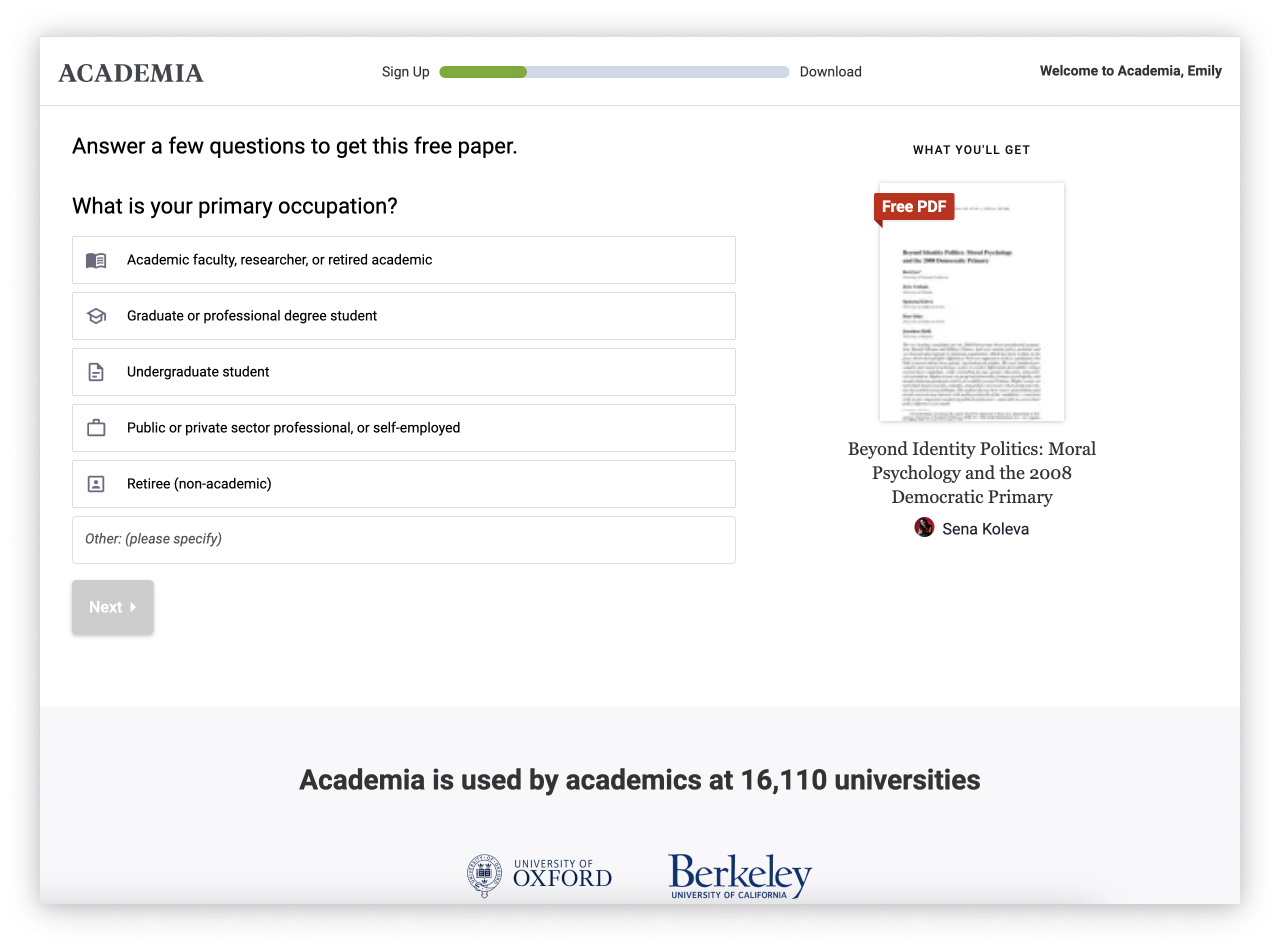
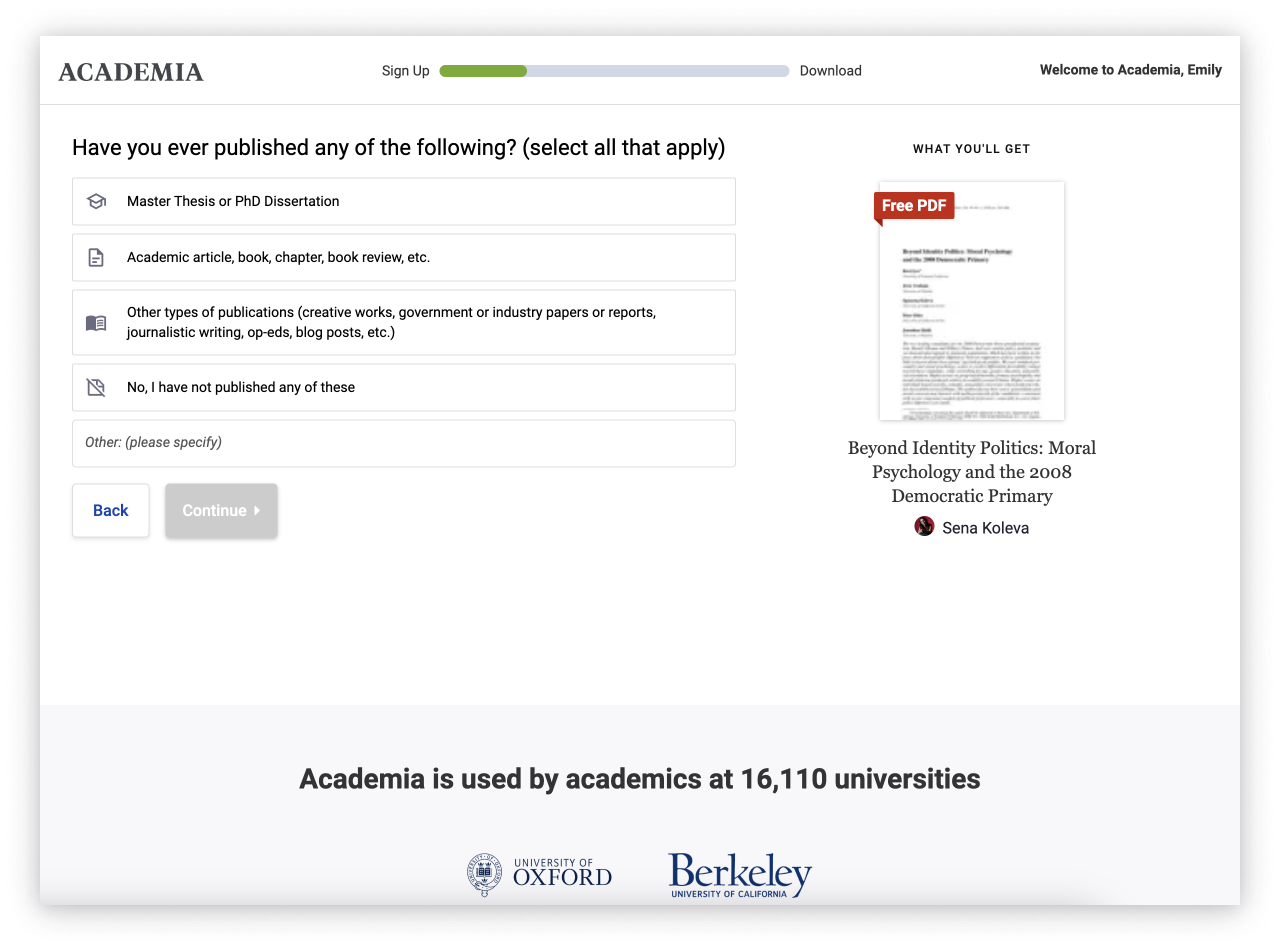
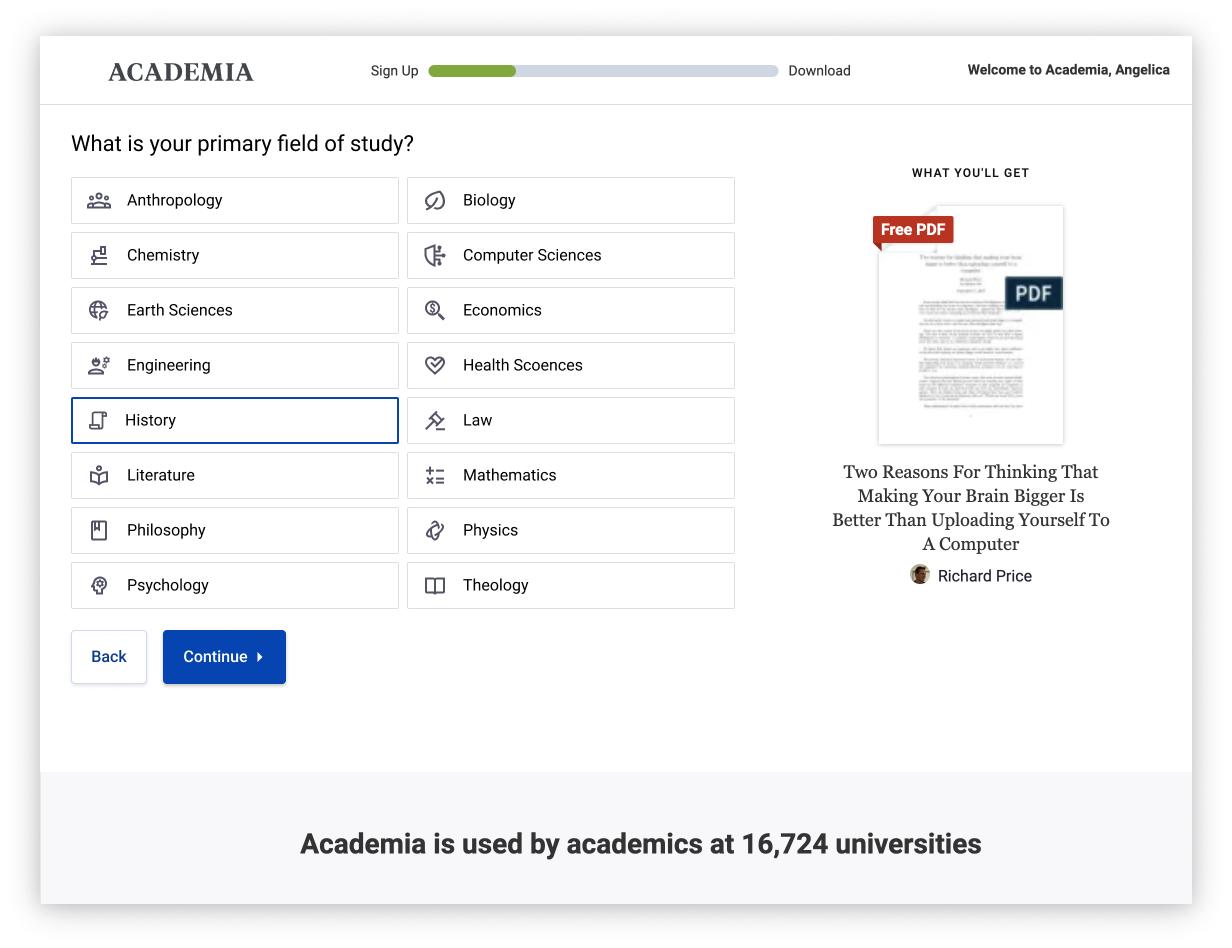
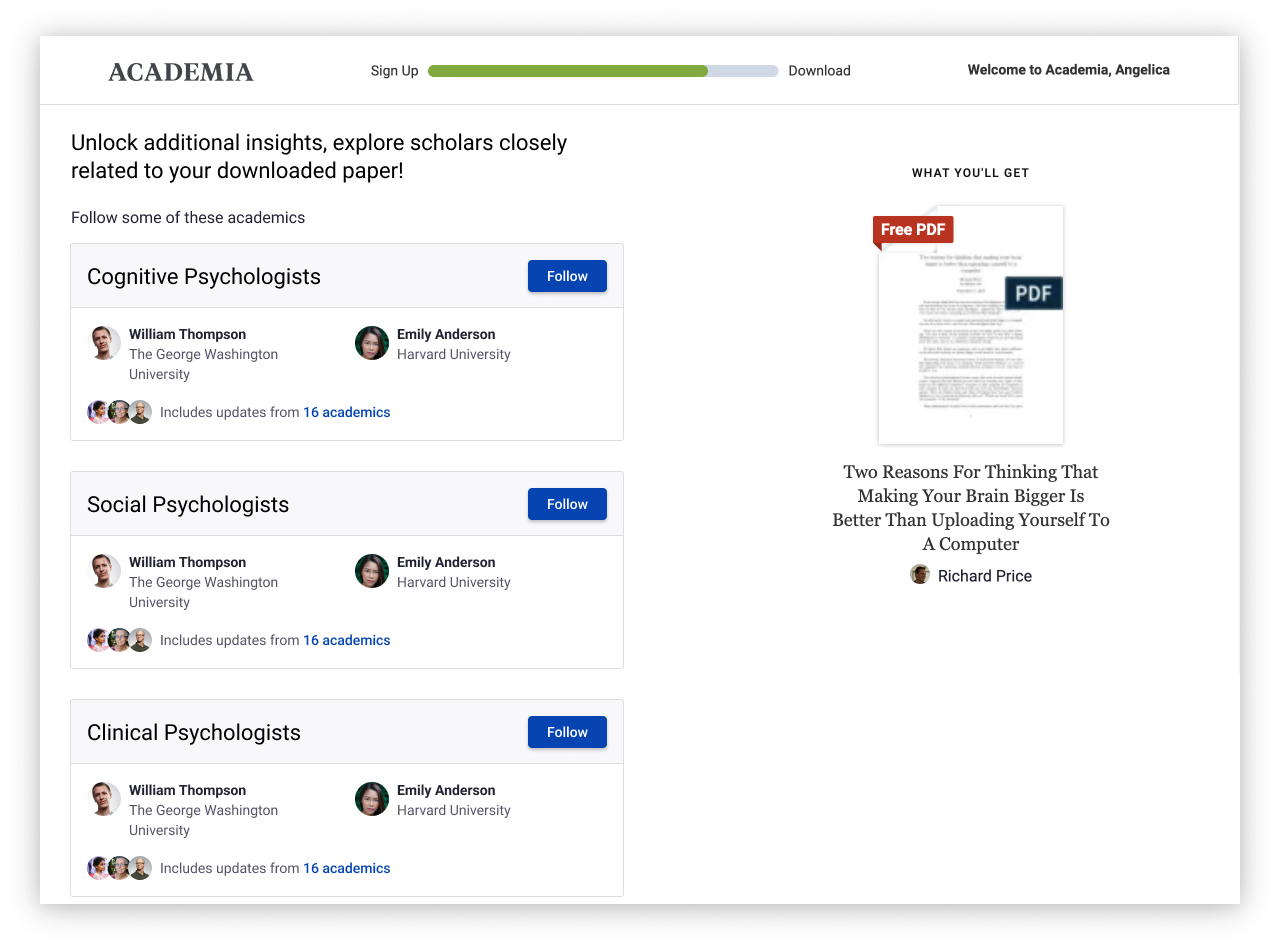
The original new user onboarding flow
The problems behind the problem
The current onboarding flow had some baggage we first had to overcome. It had never had a clear product owner, yet it was one of the most popular channels for product teams to run A/B tests.
Cross-functional roles,
responsibilities, and requirements
Rethinking the new user experience was lead by the Growth team. This included a PM, myself, and 2 engineers.

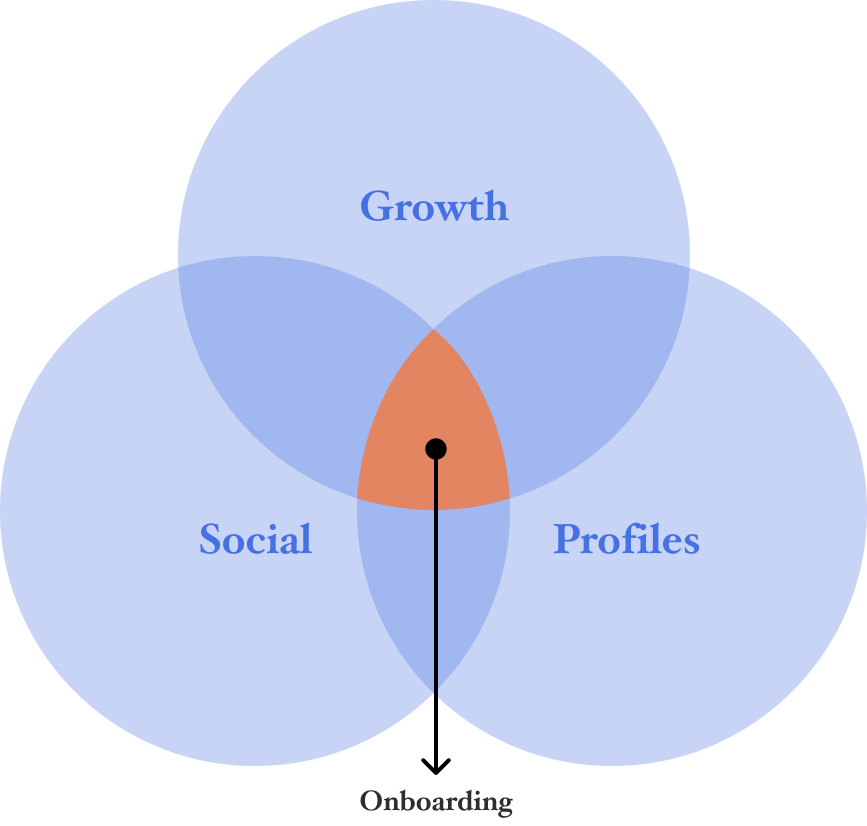
Growth is responsible for SEO acquisition funnels.
The team’s primary goal is to increase top of funnel traffic and drive more high quality sign-ups.
Profiles is responsible for identifying, collecting, and mapping user data, primarily to connect user names to author information.
The team’s primary goal is optimizing for profile completeness to support Premium business efforts.
Social is responsible for piloting the new Academia social experience.
The team’s primary focus is adoption and engagement for the social newsfeed. Particularly, information that allows the most personalized cold start.
Developmental milestones
This work was conceptualized as a multi-milestone set of projects. Milestone 1 would focus on re-establishing the baseline of the Academia new user experience. Larger changes would be reserved for Milestones 2 and 3. Unfortunately, this work was deprioritized before significant progress on Milestone 2 was made.

The new user experience on Academia
For the first milestone we focused on the sign-up / log in modal, onboarding question flow, and welcome email. The upsell and optimizations to the landing experience were deemed out of scope for the first milestone.
Milestone 1
Landing experience
Part one
Improvements to the sign up modal
Original sign up modal
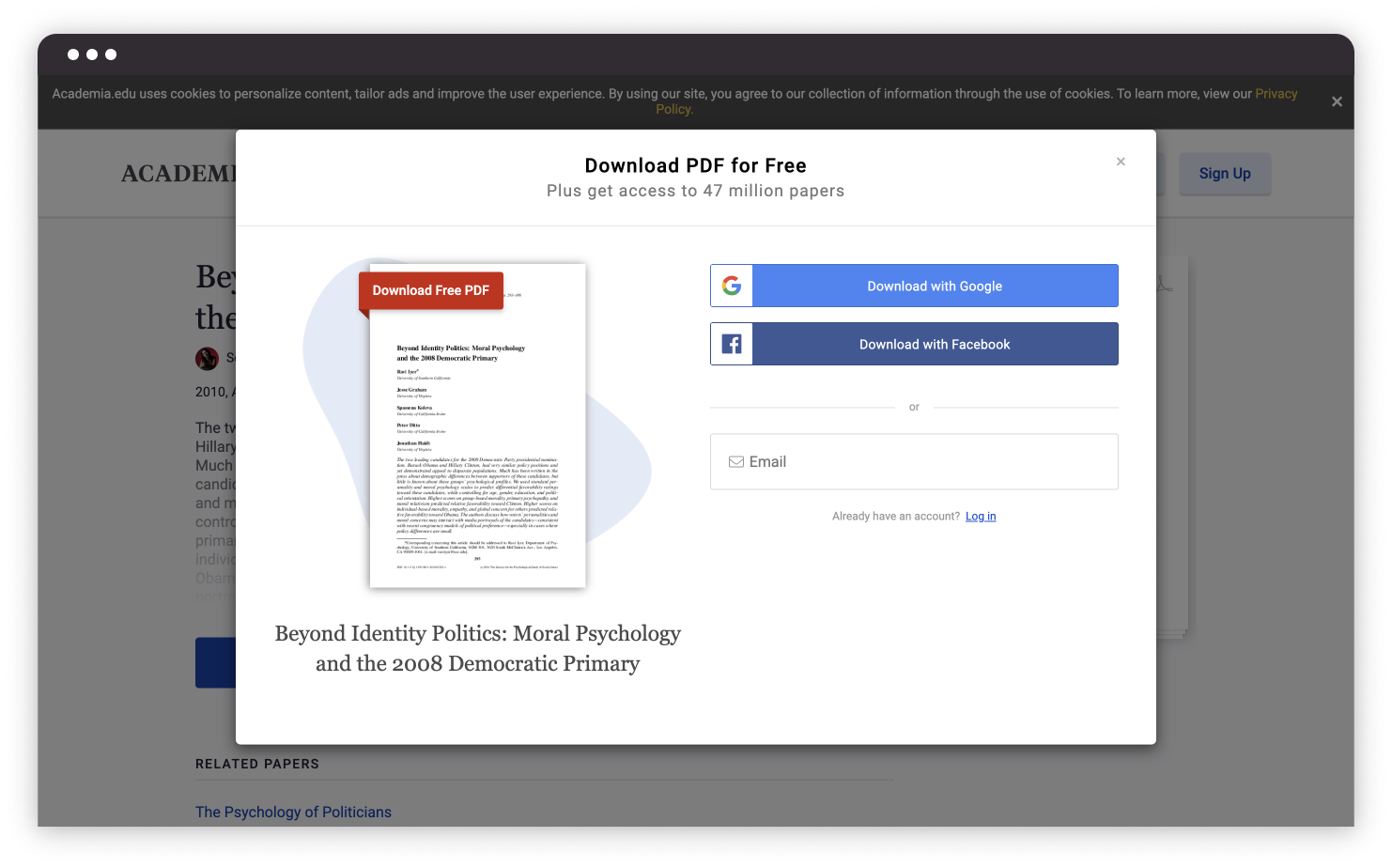
Improved sign up modal


In addition to general improvements to account creation, we also wanted to establish a single sign-up/login modal that could be used site-wide. I opted for a more utilitarian modal layout and surfaced all available sign-up options.
Merging sign up and log in flows
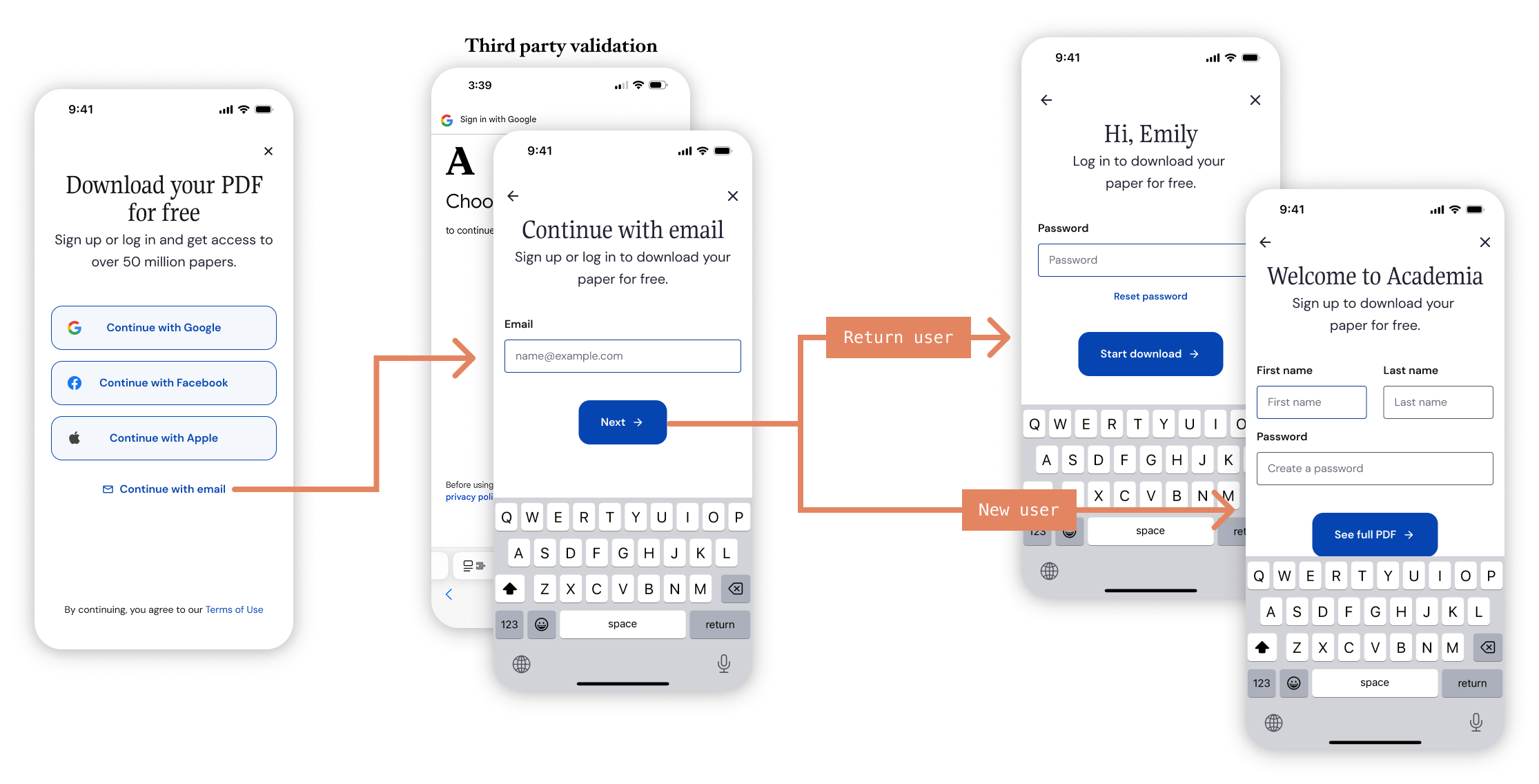
Users would often struggle to remember if they already had an account with Academia. To resolve this common pain point, I merged the sign up and log-in flows. When inputted, we validate the user’s email and guide them to the appropriate next step, sign up or log in.
Follow-up testing: copy & button order

Control

Variant B
Tested copy variations that led with the value prop rather than the action

Variant C
Tested whether the ordering and styling of the buttons could affect selections (answer: yes)
What we accomplished
Sign up modal improvements
+2.7%
Sign ups from logged out single work page
Log ins from logged out single work page
+10.34%
Impact on sign-up once new sign up and onboarding flows were launched
Immediate impact on log ins
Onboarding question flow
Part two
There was a lot of aspects of the current onboarding experience that needed to be maintained. We needed to keep the sign-up to view / download requirement, support a variety of questions, and keep the Premium upsell shown post-questionnaire.
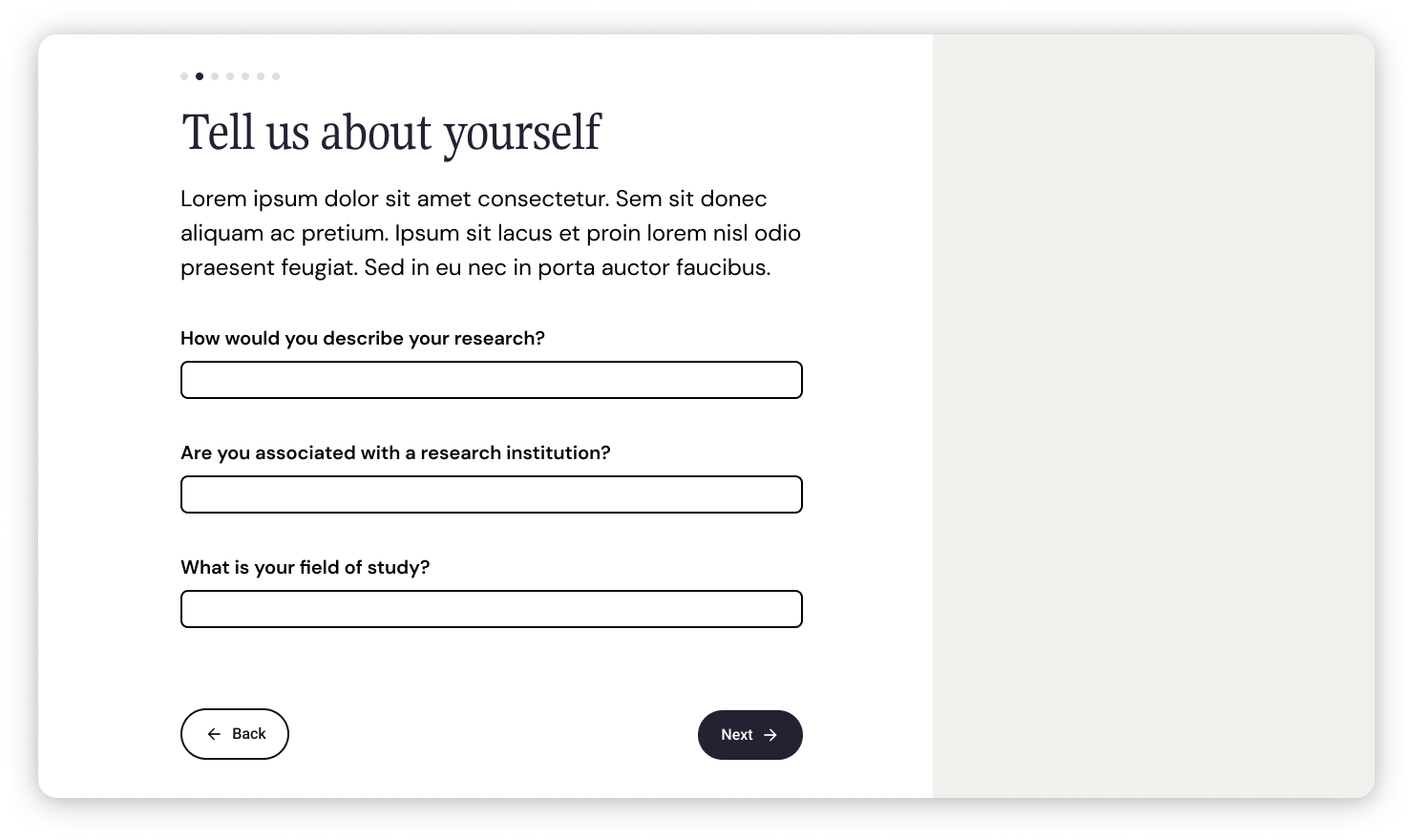
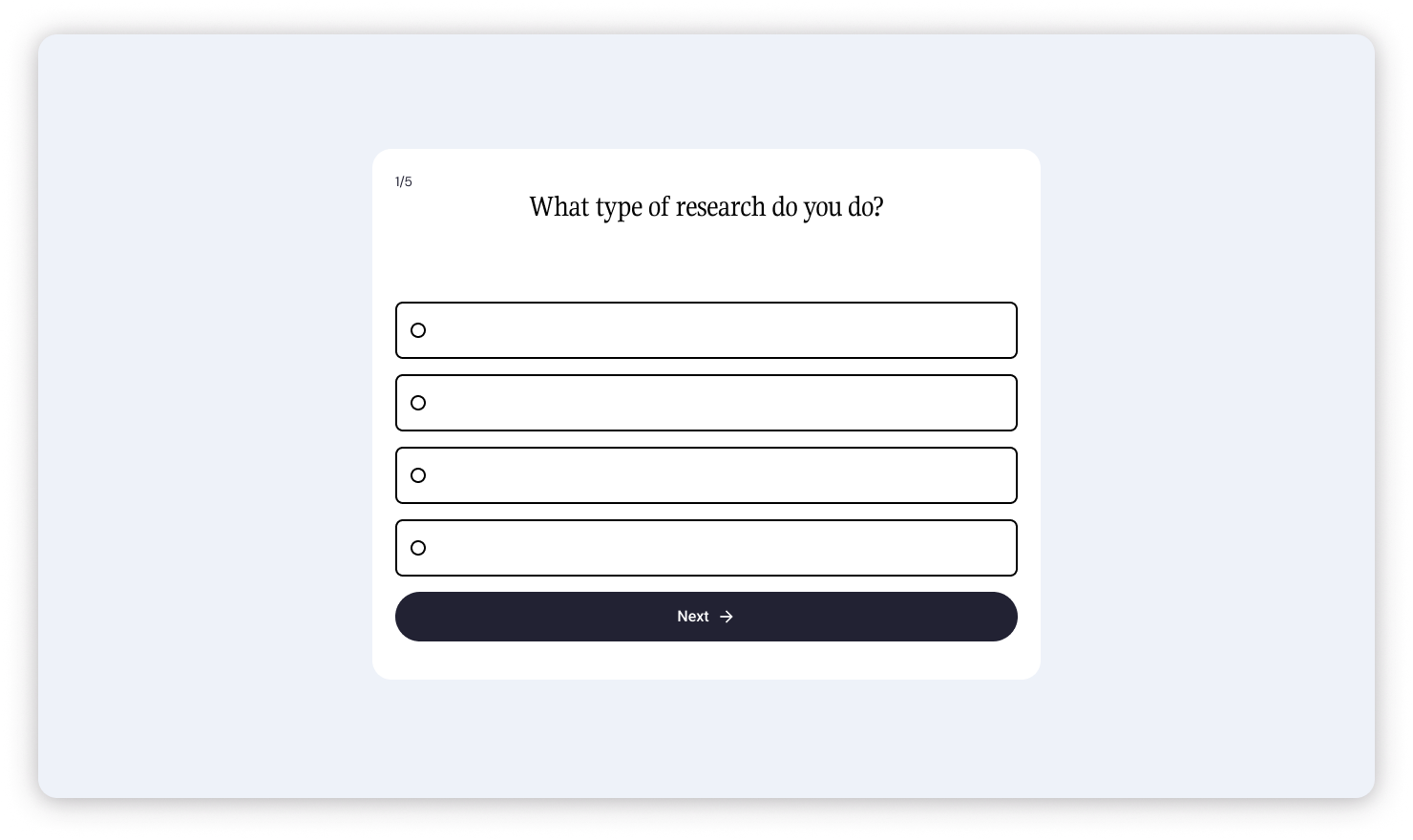
Onboarding structure explorations
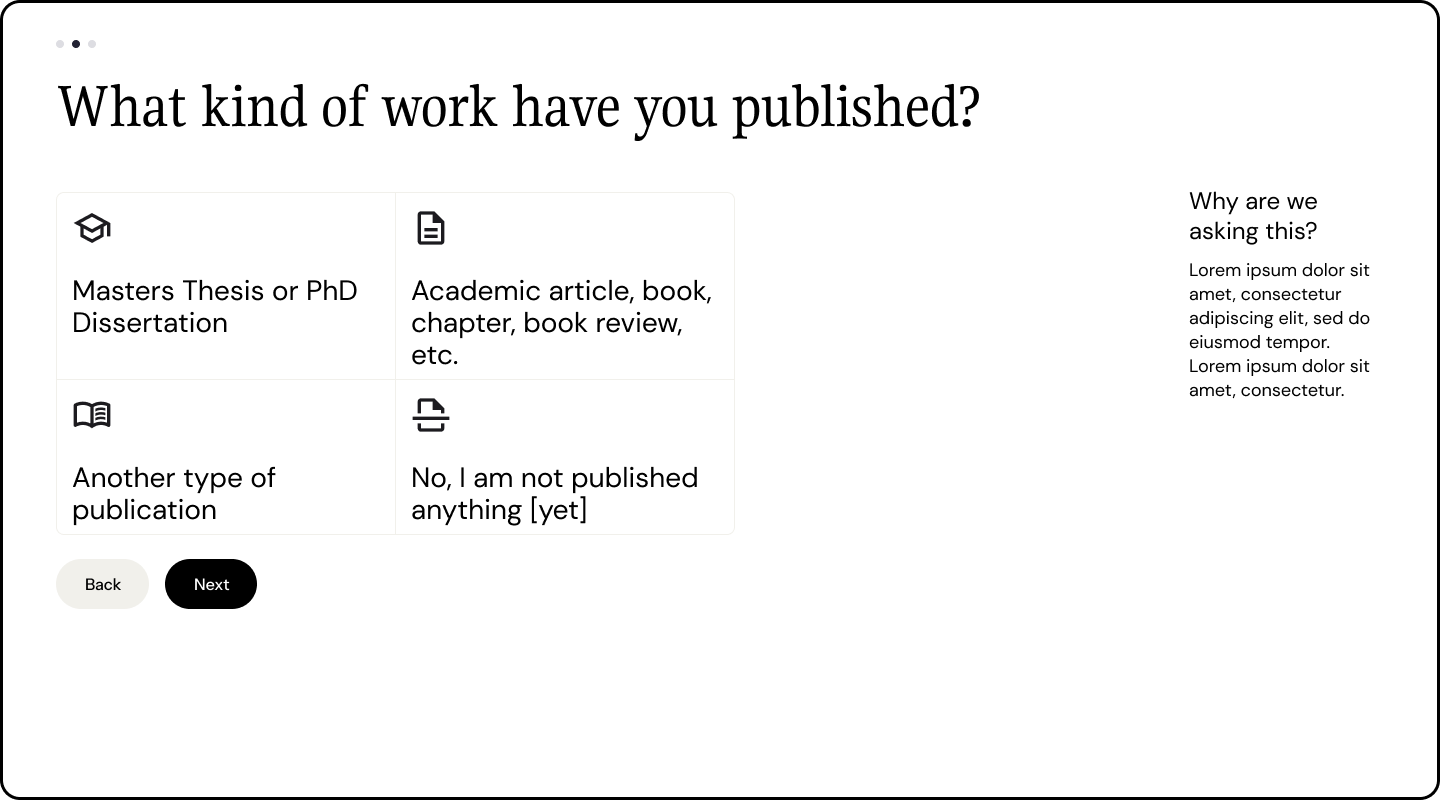
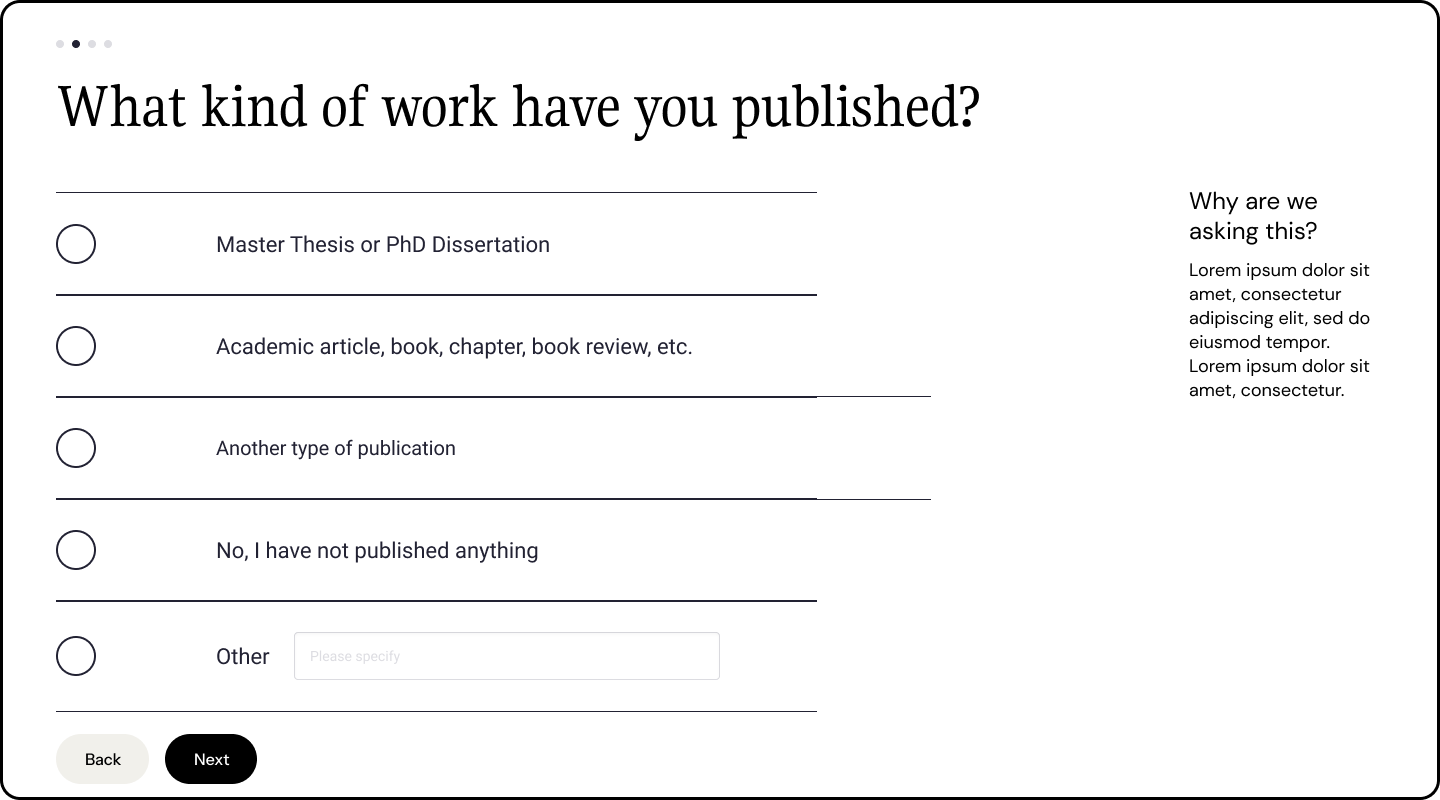
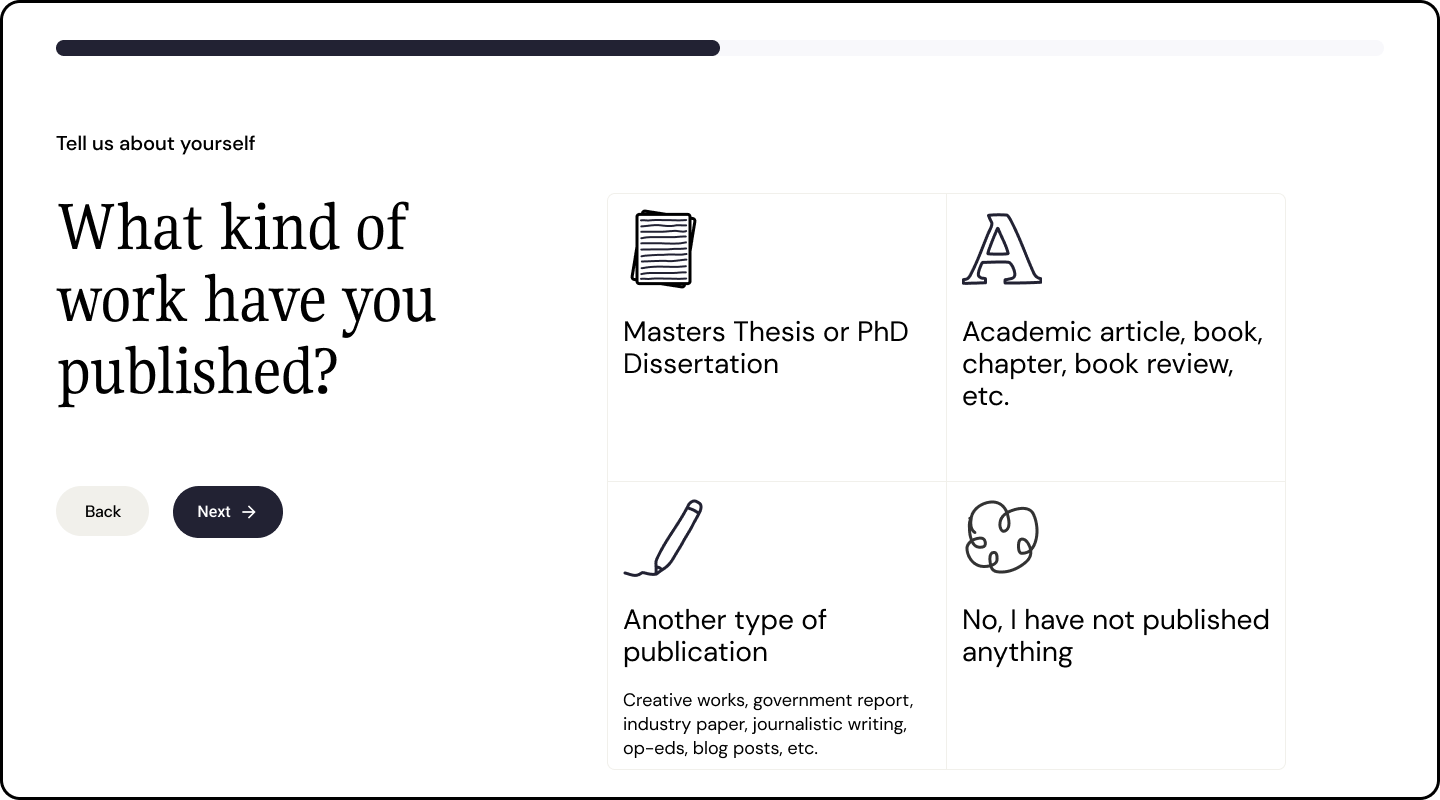
Exploring a new page structure for the questions was the first thing I rethought. I wanted to define a scalable template that would serve our somewhat ambiguous set of requirements.
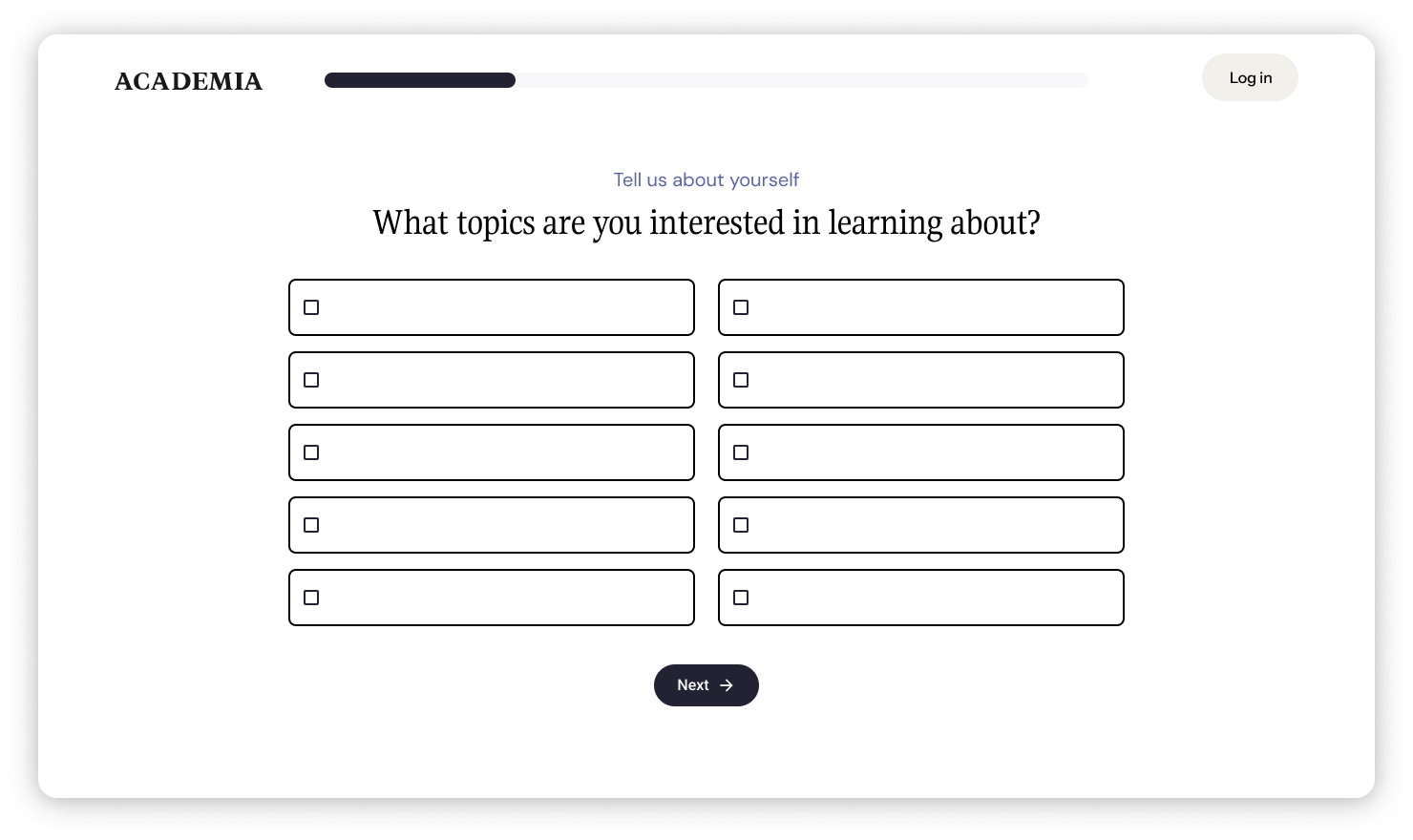
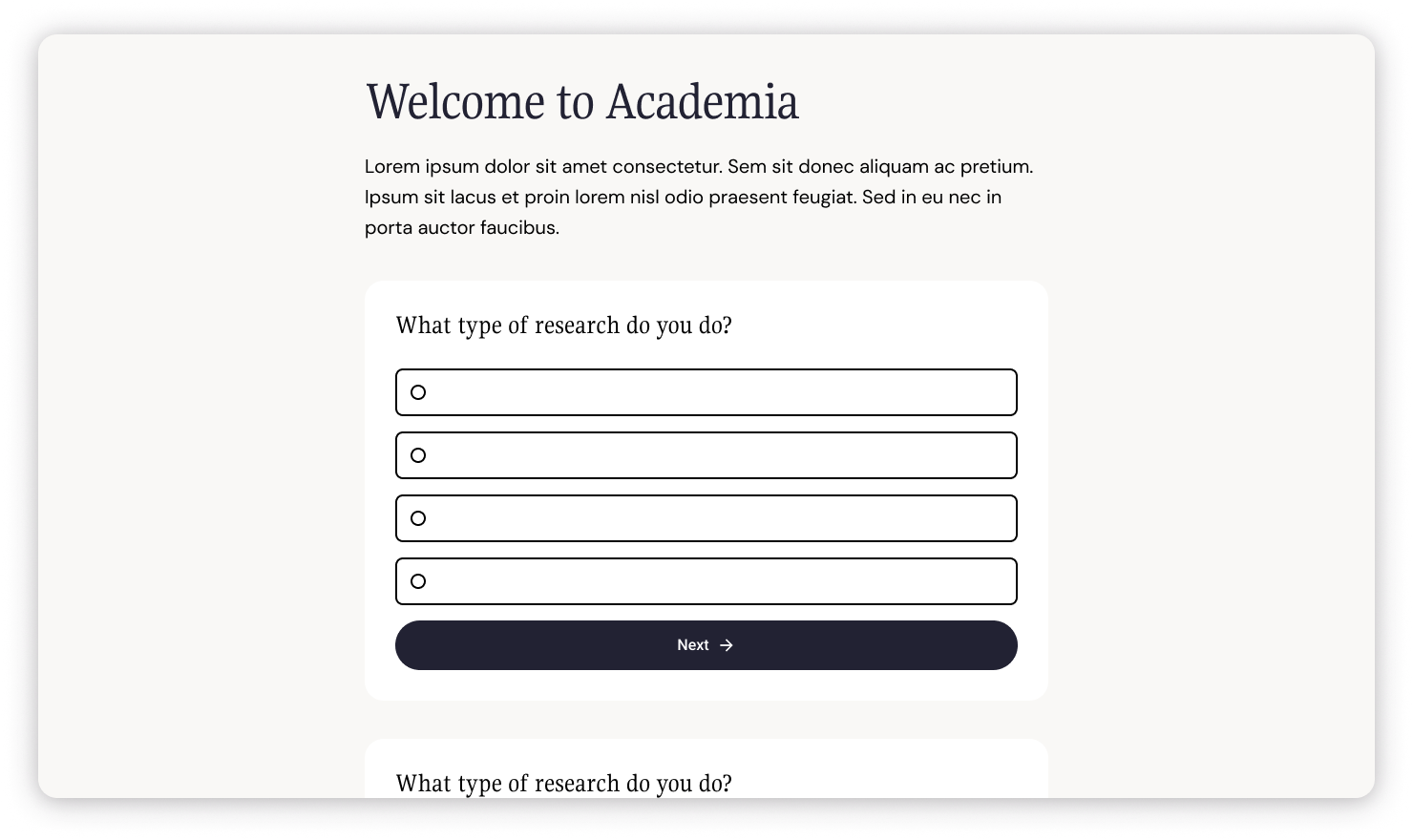
Top: Vertical scrolling form
Right: Fullscreen, one-question-at-a-time
Right: Faux-
modal style
Above: Split-screen with space for branding &/or content
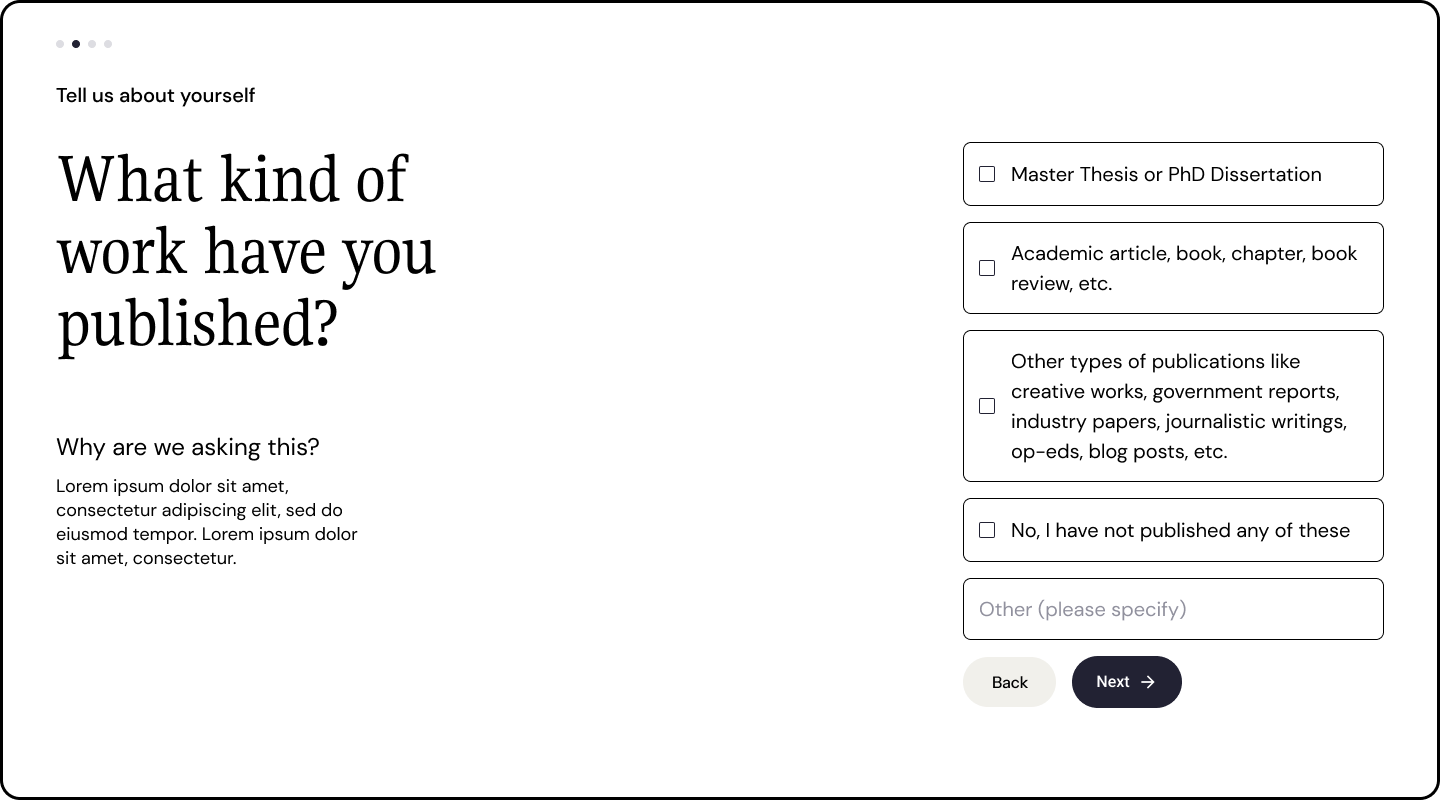
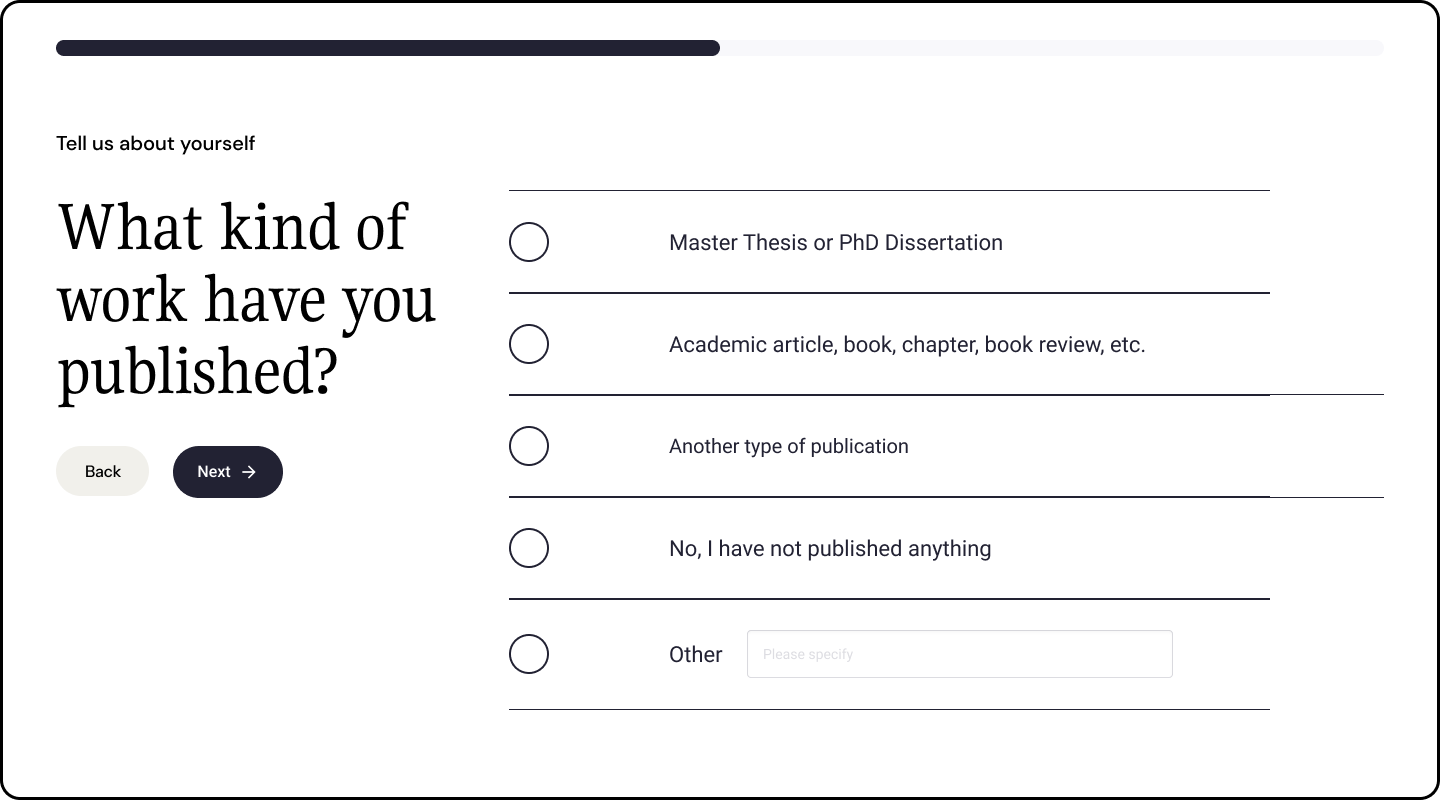
Question and answer explorations
The next UI exploration was about the look and feel of the questions themselves.

Question styling & layout
First pass
At the same time the onboarding work was taking form, Academia was also undergoing a brand refresh. The first milestone of onboarding would launch before the new visual direction was fully established. Therefore, I was tasked with creating a visual style in “the spirit of the new branding direction” that could serve as an aesthetic stopgap.
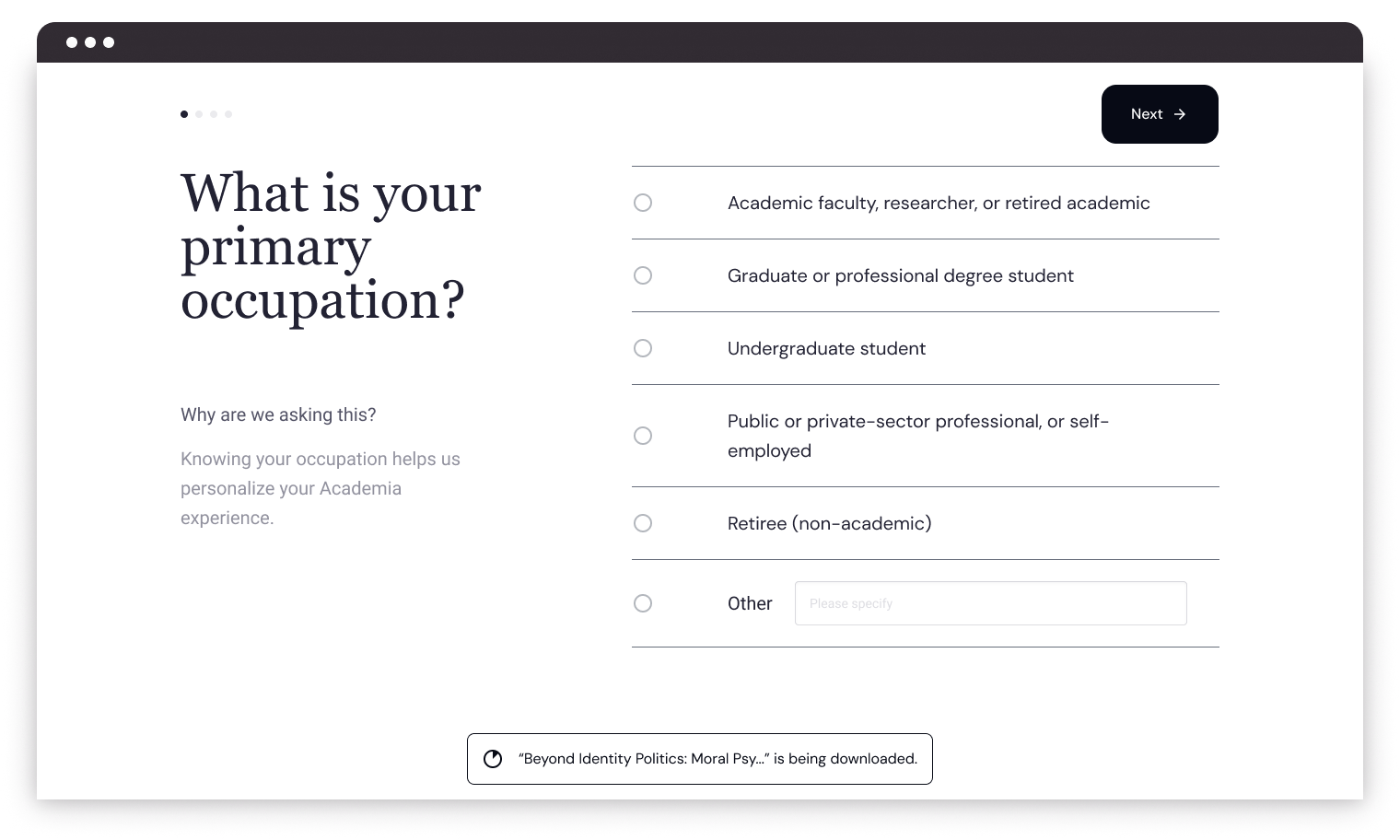
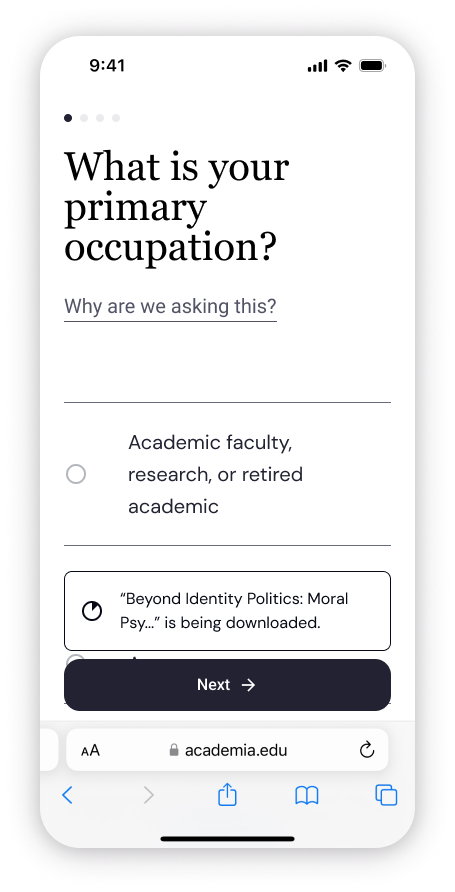
Core question flow
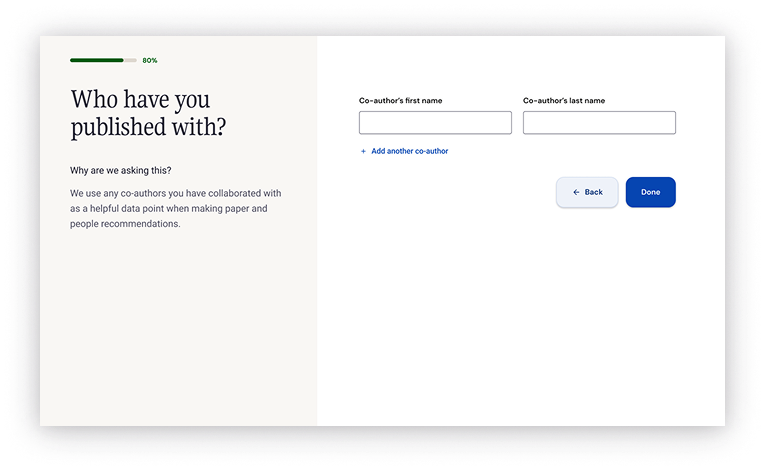
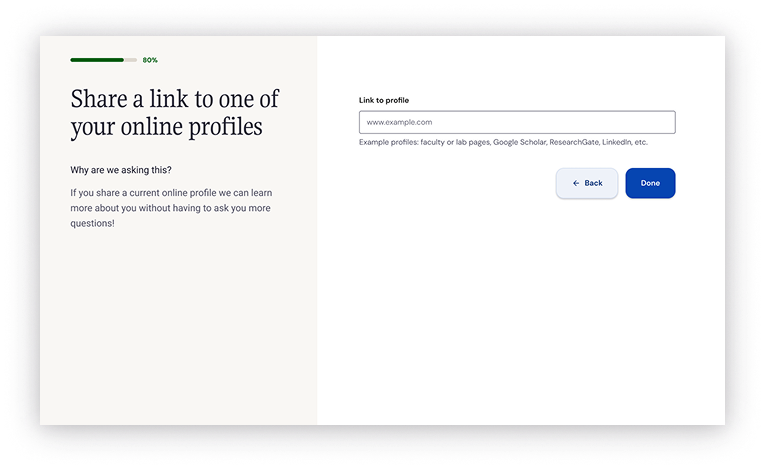
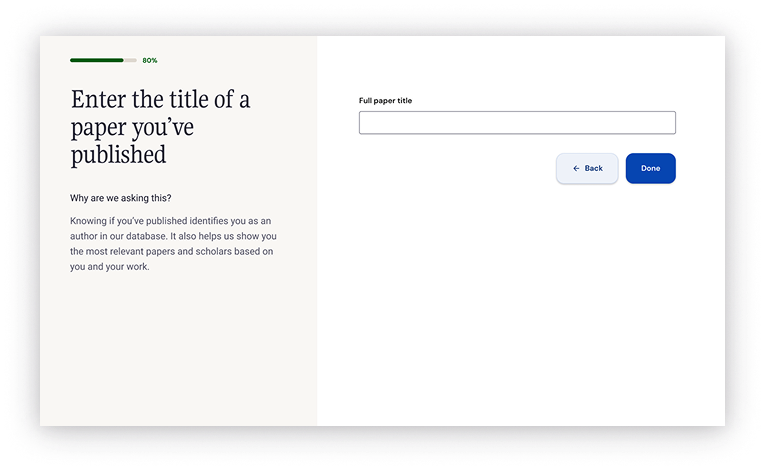
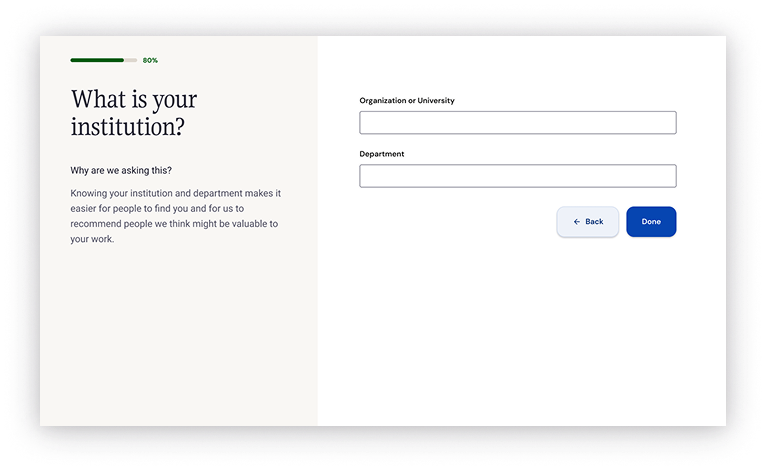
Not only did we support our core, required questions, I included a question currently being A/B tested by the Social team to demonstrate the flexibility of the onboarding system.
Wildcard!
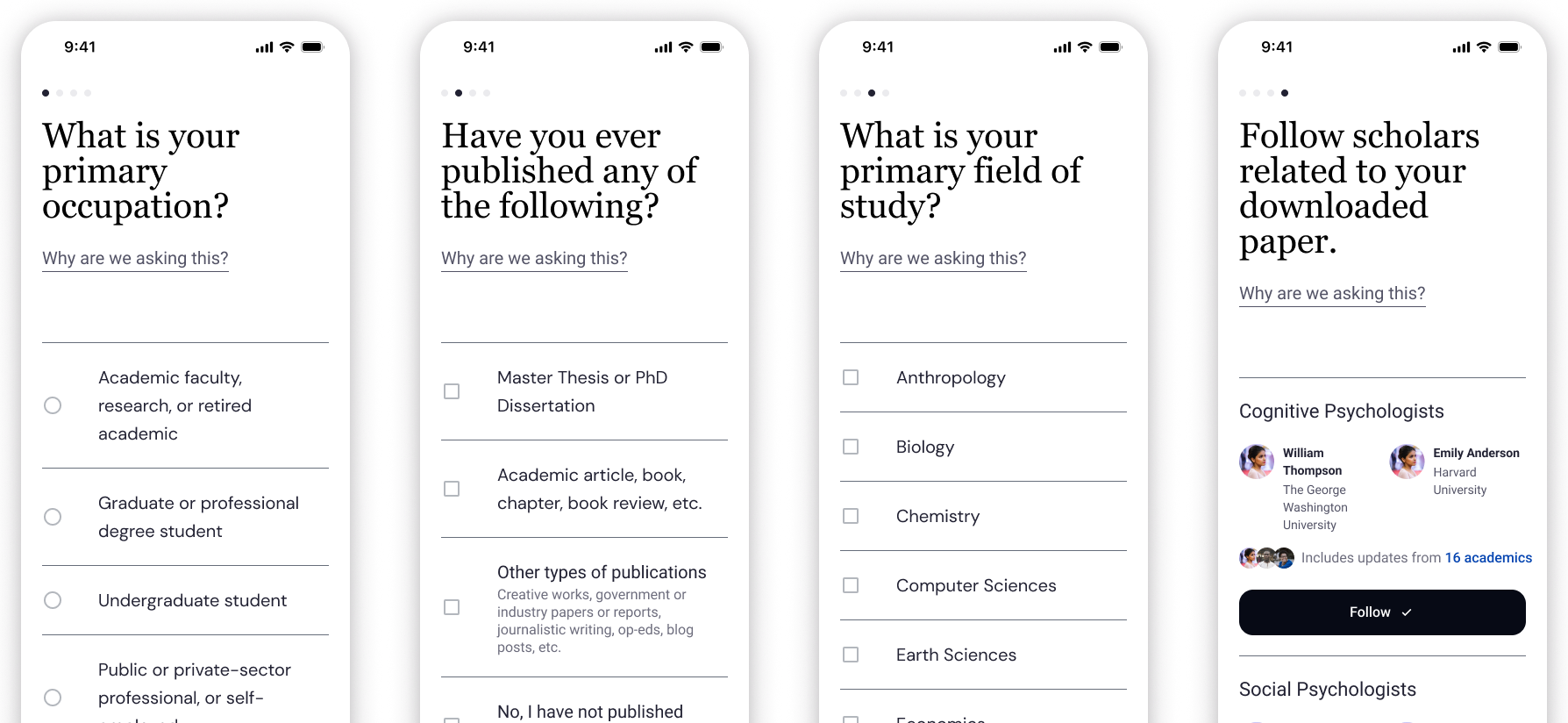
Question styling & layout
Second pass
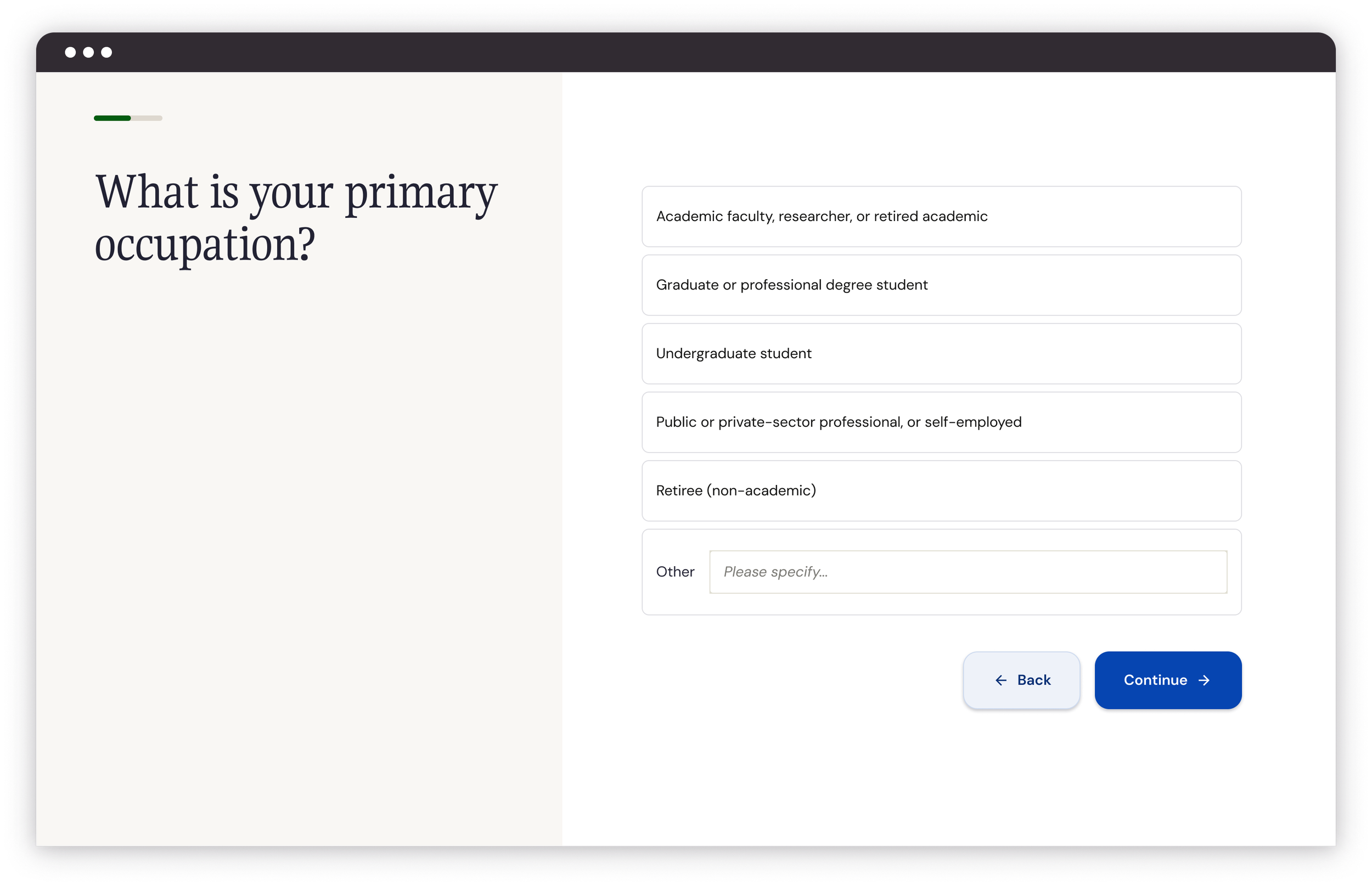
Styling evolved once the new brand direction was established. Our color palette expanded, type styles changed, and I tested new answer components.
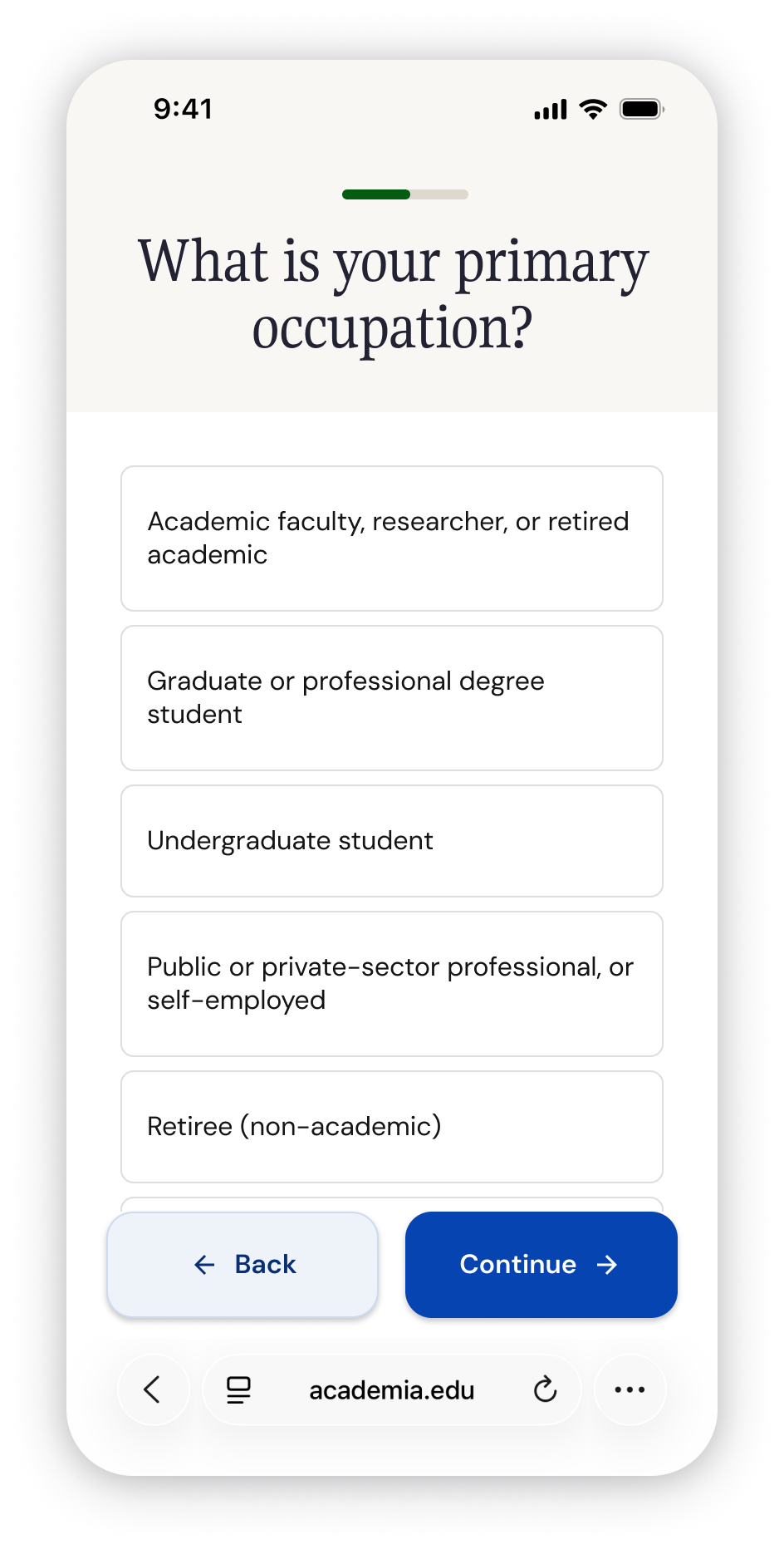
Iteration & future use
The layout and design were able to support many future questions.

What we accomplished
Onboarding flow metrics
2.5x
Completion of onboarding flow
Decreased drop-off during question flow significantly!
Repeat visits
+8.4%
Users who returned to the platform within 30 days
Upgrades was a do-no-harm metric but the new flow saw a slight increase to Premium upgrades.
+2.4%
Upgrades
Metrics important to other stakeholders
Completion of experience-critical questions
+23.1%
+16.6%
Authorship question (#2)
User role question (#1)
Engagement with landing page
+2m 34s
We saw an overall increase on dwell time on the social feed
Redesigning our welcome email
Part three
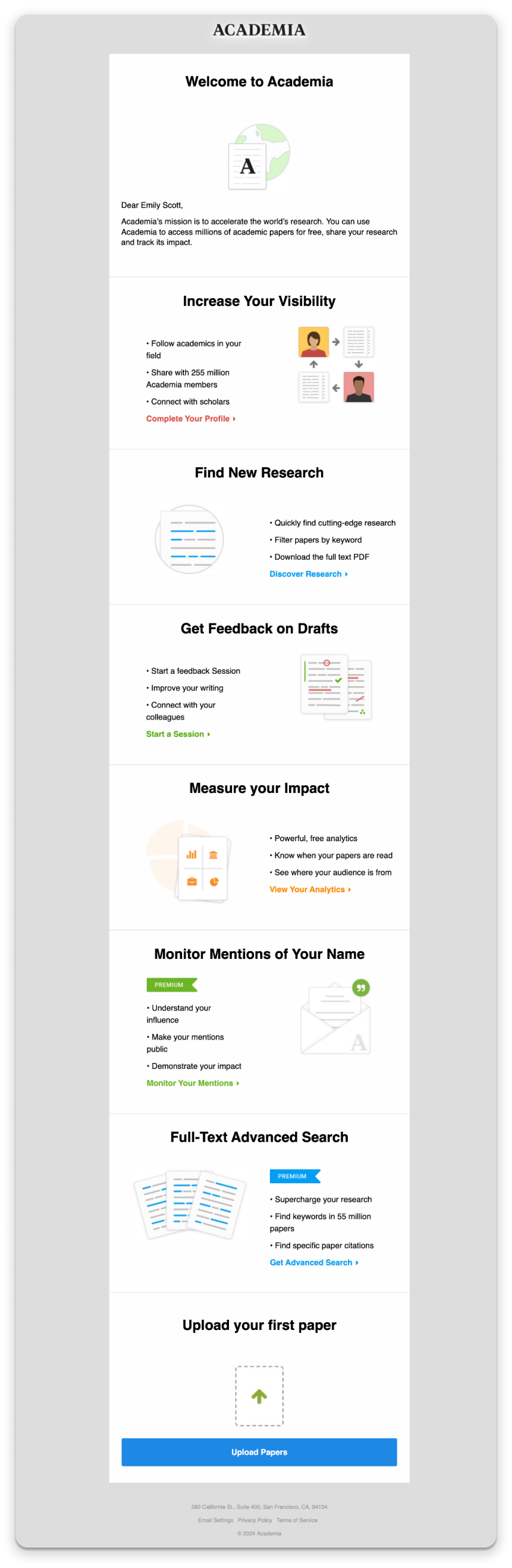
The original welcome email
I designed a goldilocks set of emails to test our approach to content and styling.
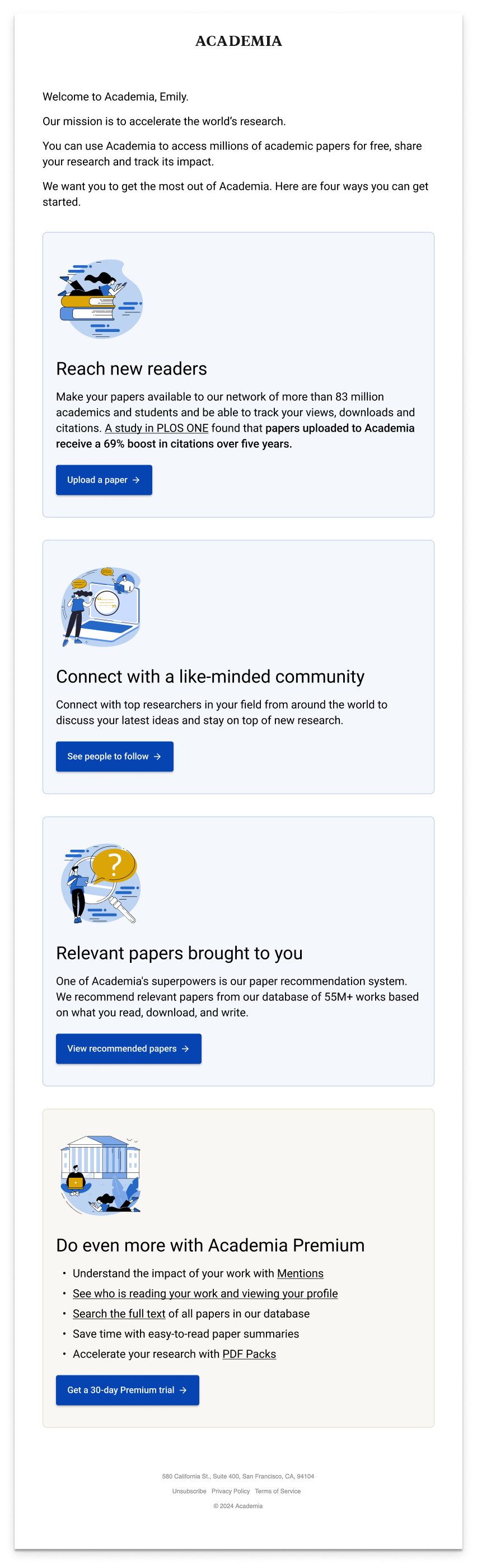
Variant 1
Variant 2
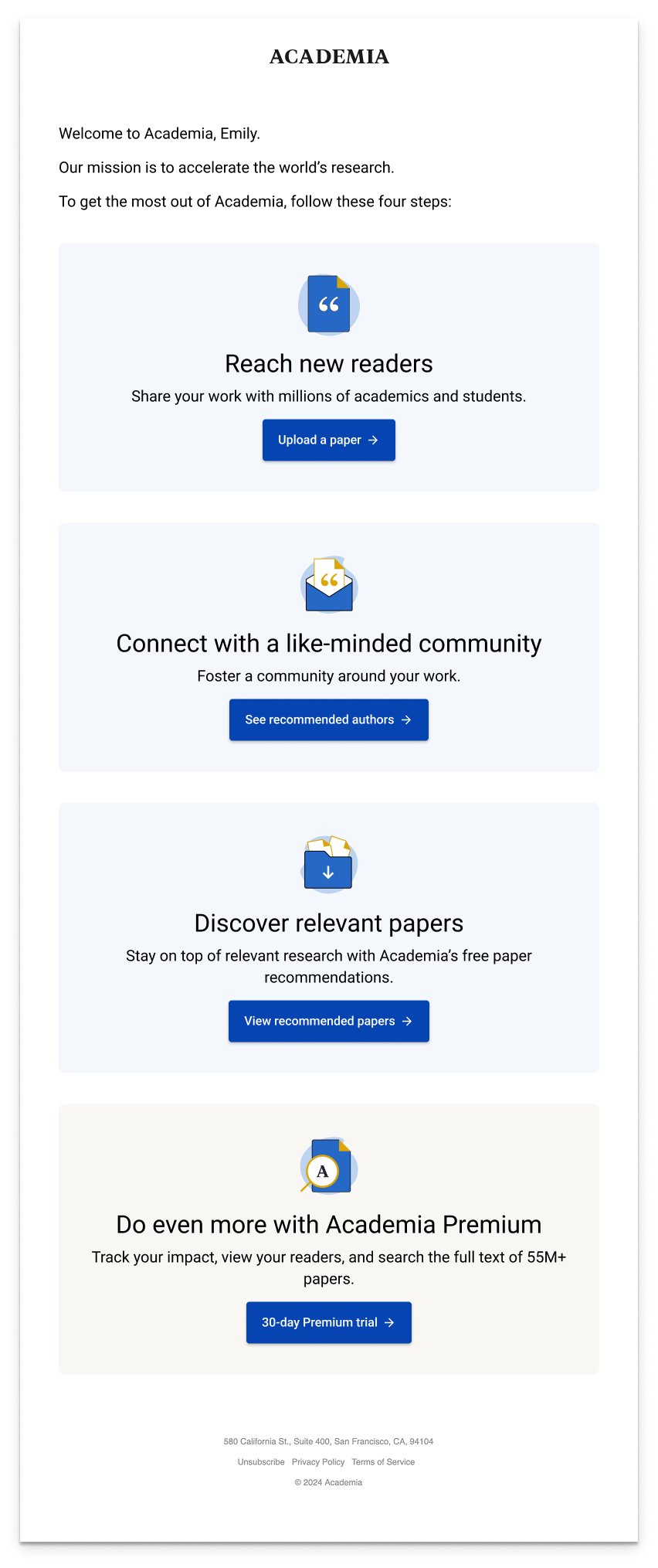
Variant 3
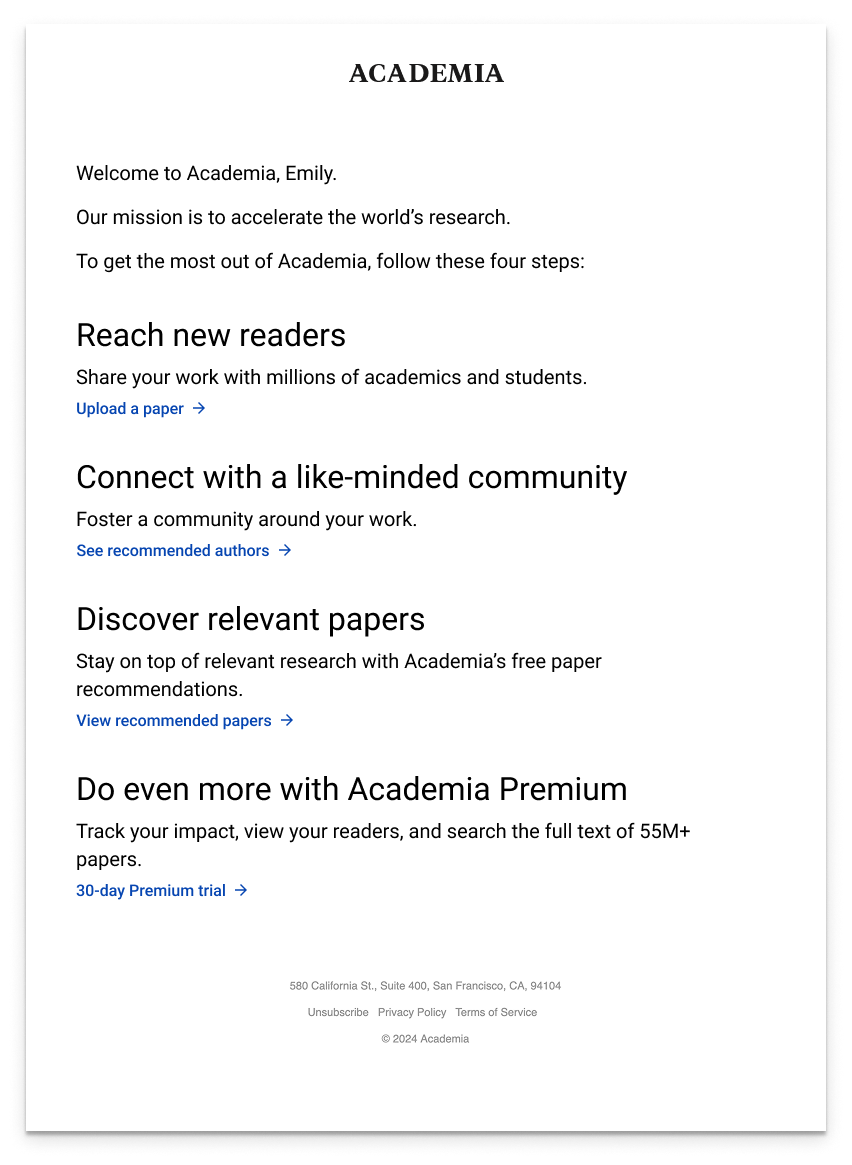
Variant 2
Winning email variant
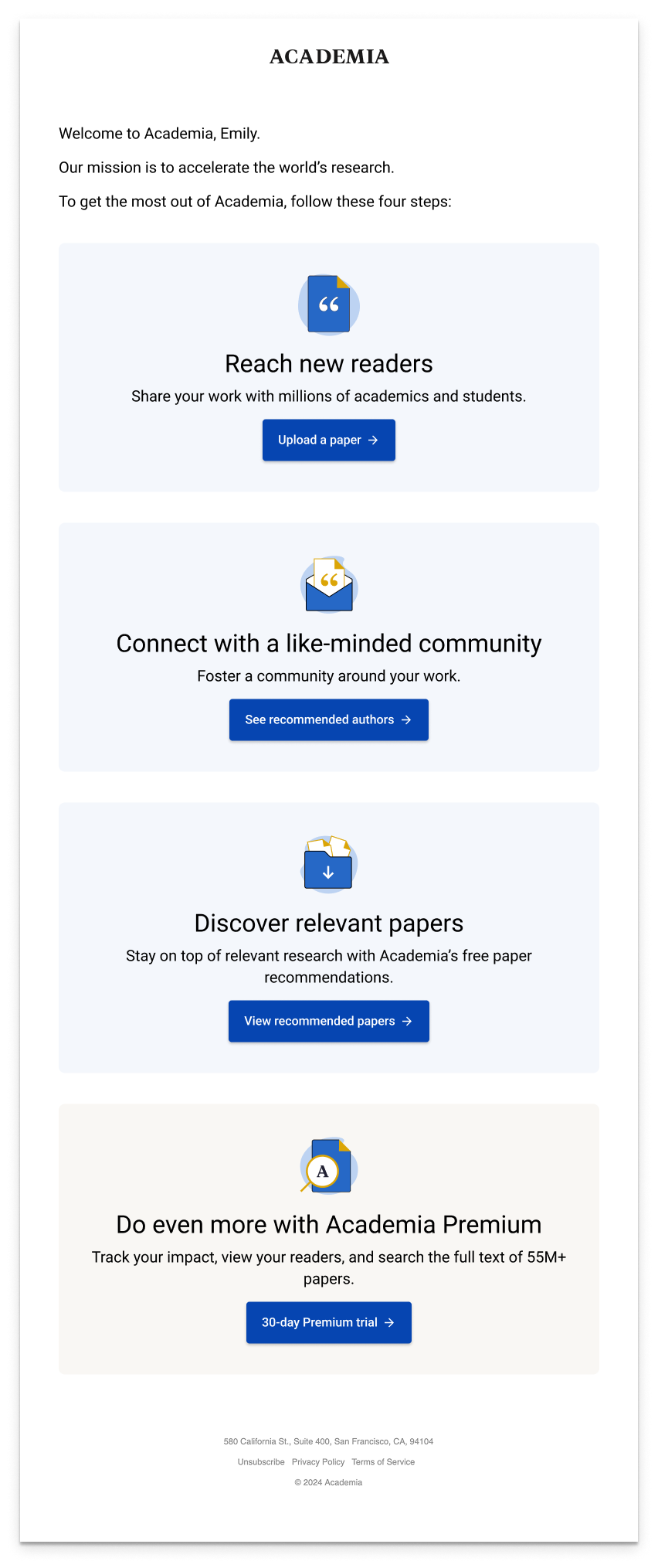
The second variant with spot illustrations, button calls to action, and streamlined value props had the best performance across all metrics.
In multiple email tests, Academia found that content-heavy emails receive less engagement than shorter layouts.
CTR
Revenue / user
+$.112
+2.89%
Versus control’s +$.109
Versus control
What I would do differently
The original plan was milestone-based, we never made it to milestone 2
Think bigger

At Academia there are many strongly held beliefs that are unshakeable
Dig deeper into our assumptions
More ‘download’ location testing
We only tested a single change to the moment of download
Focus on the breadth of questions from the get-go
Rather than limiting myself to the baseline questions, I think proactively proving the flexibility of the proposed system would have gone a long way in calming stakeholder concerns